Inbound Warehousing: What Happens When Your Freight Arrives
Inbound Warehousing Starts Before the Truck Backs In
Inbound warehousing is the first step your inventory takes once it hits US soil. Whether you’re importing full containers from Shenzhen or receiving LTL shipments from a domestic supplier, the process of receiving, inspecting, and putting away product determines how fast you can sell. Get it wrong, and you’re looking at miscounts, damaged goods sitting unnoticed, and delays that ripple through your entire sales pipeline.
At MeisterPrep’s inbound warehousing operation, every container and pallet goes through a structured intake process. Here’s what that actually looks like on the ground.
Step 1: Appointment Scheduling and Dock Assignment
Before your freight arrives, the warehouse needs to know it’s coming. That sounds obvious, but a surprising number of sellers ship containers without providing advance notice. This leads to detention charges when the truck can’t unload on time.
A proper inbound warehousing workflow starts with an ASN (Advance Shipping Notice). The ASN tells the warehouse what’s arriving, how many units, and what SKUs are included. The warehouse then assigns a dock door and receiving team based on volume.
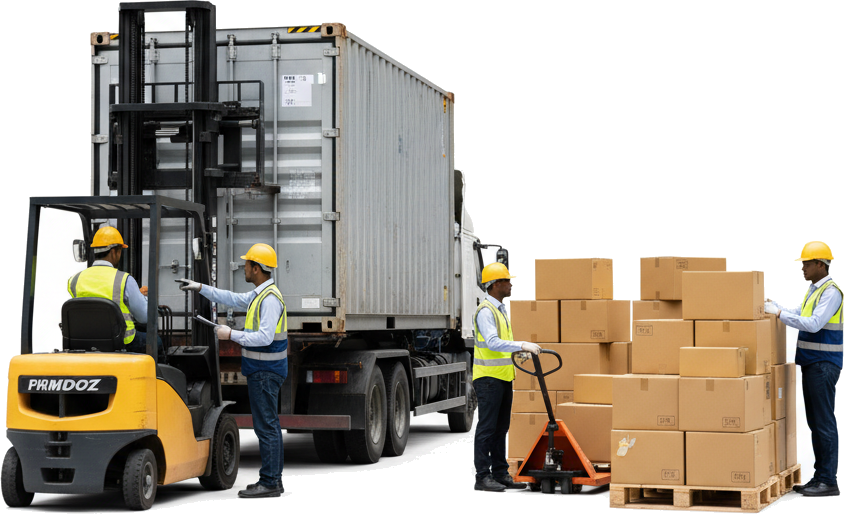
For a standard 40ft container, expect the unload to take 2 to 4 hours depending on how the goods are packed. Floor-loaded containers (no pallets inside) take longer because every carton must be hand-stacked onto pallets at the dock.
What Happens During Receiving
Once the truck is at the dock, the receiving team starts pulling product. Each carton gets scanned against the ASN. Discrepancies get flagged immediately. Common issues include:
- Carton counts that don’t match the packing list
- Wrong SKUs mixed into the same pallet
- Water damage or crushed boxes from transit
- Missing or incorrect labeling on outer cartons
The warehouse documents all damage with photos and notes. This is your evidence for filing freight claims later. If your 3PL doesn’t do this automatically, you’re leaving money on the table every time something arrives damaged.
Quality Inspection
Some sellers request a spot-check inspection during inbound warehousing. This means the team opens a random sample of cartons (usually 5% to 10%) and checks for product defects. For Amazon FBA sellers, this step catches problems before units get prepped and shipped to fulfillment centers, where returns are expensive.
Walmart WFS and TikTok Shop sellers benefit from this too. Catching a labeling error at the warehouse costs a few cents per unit to fix. Catching it after customer delivery costs $5 to $15 in return processing.
Putaway and Storage Location Assignment
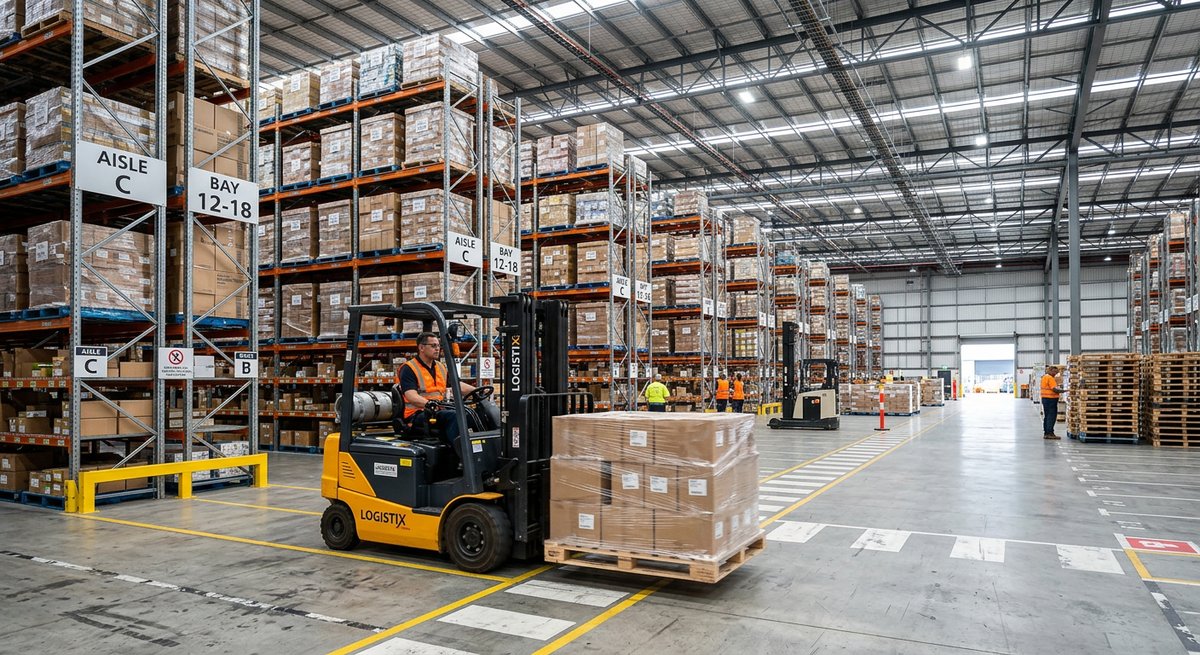
After receiving, your inventory needs a home. A WMS (Warehouse Management System) assigns each SKU to a bin, shelf, or pallet location based on size, weight, and expected velocity. Fast-moving SKUs go in easy-access pick locations. Slow movers go up on racking.
This matters more than most sellers realize. Poor putaway logic means pickers walk farther, pick slower, and make more errors. If your 3PL is charging you per-order pick fees, their efficiency directly affects your cost per unit shipped.
Lot Tracking and FIFO
If you sell products with expiration dates (food, supplements, beauty), your inbound warehousing process must include lot tracking. Each batch gets a lot number tied to its manufacturing or expiration date. The WMS then enforces FIFO (First In, First Out) so older inventory ships before newer stock.
Without this, you end up with expired product sitting behind fresh inventory. That’s a direct write-off.
Inbound Warehousing Costs: What to Expect
Pricing varies by 3PL, but most charge for inbound warehousing as a combination of these fees:
- Container unloading: $300 to $600 for a 40ft container (floor-loaded costs more)
- Receiving per carton: $0.15 to $0.50 depending on whether labeling or inspection is included
- Palletizing: $4 to $8 per pallet if goods arrive floor-loaded
- Putaway: sometimes bundled with receiving, sometimes charged per pallet ($3 to $6)
For a typical 40ft container with 800 cartons on 20 pallets, total inbound costs usually land between $500 and $1,200. That’s roughly $0.60 to $1.50 per carton, depending on the level of service.
How to Reduce Your Inbound Costs
The biggest cost driver is how your supplier packs the container. Palletized containers unload in half the time. Proper carton labeling (SKU, quantity, PO number on every box) speeds up receiving. If your supplier can apply FNSKU labels at origin, you skip an entire prep step at the warehouse.
Talk to your 3PL about their requirements before your next shipment leaves the factory. A 30-minute conversation can save hundreds of dollars per container.
Why Inbound Warehousing Sets the Tone for Everything Else
Every downstream process depends on accurate receiving. If the inventory count is wrong at intake, your pick-and-pack accuracy drops. If putaway is sloppy, orders take longer to fulfill. If damage goes undocumented, you eat the loss.
Sellers who treat inbound warehousing as an afterthought tend to have higher error rates, more customer complaints, and worse margins. The ones who dial it in see fewer stockouts, faster order processing, and cleaner inventory reports.
Whether you’re running Amazon FBA, Shopify D2C, B2B wholesale, or all three, your inbound warehousing process is the foundation. Make sure your 3PL treats it that way.