Featured image for post 9570
  • Home
  • Blog
  • Selling on Walmart: Fulfillment Requirements and How a 3PL Helps

Selling on Walmart: Fulfillment Requirements and How a 3PL Helps

Walmart Fulfillment Demands Are Different from Amazon

Walmart is the second-largest ecommerce marketplace in the US, with over 120 million monthly unique visitors. For sellers already on Amazon, expanding to Walmart seems like an obvious next step. But Walmart fulfillment has its own rules, performance standards, and logistics requirements. Treating it like a copy of your Amazon operation is a mistake that costs sellers their accounts.

The opportunity is real. Walmart Marketplace has fewer sellers than Amazon (around 150,000 vs. over 2 million), which means less competition per listing. Conversion rates are strong because Walmart shoppers trust the platform. The question is whether your fulfillment operation can meet Walmart’s requirements consistently.

Walmart’s Fulfillment Options

Walmart gives sellers three paths for fulfillment.

Walmart Fulfillment Services (WFS): Walmart’s version of FBA. You send inventory to Walmart’s fulfillment centers. They pick, pack, and ship orders. Your listings get a “Fulfilled by Walmart” tag and qualify for Walmart+ free shipping. Storage fees run $0.75 per cubic foot per month, lower than Amazon FBA’s rates.

Seller Fulfilled: You (or your 3PL) ship orders directly to customers. You control the fulfillment process but must meet Walmart’s delivery speed and accuracy standards. This is where a 3PL experienced in marketplace fulfillment makes a difference.

Walmart GoLocal / DSV: A drop-ship vendor program for larger brands. Products ship from your warehouse when Walmart receives an order on walmart.com. Higher volume requirements and tighter SLAs.

WFS vs Seller Fulfilled: Which to Choose

WFS works well for standard-size products with strong velocity. The “Fulfilled by Walmart” badge improves Buy Box win rates and customer trust. Storage costs are competitive, and the fulfillment fees are comparable to FBA.

Seller Fulfilled makes sense for oversized products, slow-moving SKUs, or sellers who need multi-channel inventory. Sending the same inventory to both FBA and WFS splits your stock and increases your risk of stockouts on one platform. A 3PL shipping direct to customers from one inventory pool solves that problem.

Walmart Fulfillment Performance Standards

Walmart does not mess around with seller performance. Their standards are strict, and violations lead to suspensions fast. Here are the key metrics:

  • On-time delivery rate: 95% or higher
  • Valid tracking rate: 99% or higher
  • Cancellation rate: under 2%
  • Return rate: monitored but varies by category

On-time delivery is the one that trips up most sellers. Walmart measures it against the delivery promise shown to the customer at checkout. If you promise 3-5 business days, the package must arrive within that window at least 95% of the time.

This is where shipping from the wrong location kills you. If your warehouse is in Los Angeles and a customer in New York orders with a 3-day delivery promise, ground shipping will not make it. You either need a warehouse closer to the East Coast, or you need to adjust your delivery promises to match your actual shipping speeds.

Walmart Fulfillment and Regional Warehousing

Walmart prioritizes sellers who can deliver fast across the continental US. Having inventory in a single West Coast warehouse limits your delivery speed to the eastern half of the country. Sellers with inventory in two or three regions (West Coast, Midwest, East Coast) can offer faster delivery and win more Buy Box placements.

A 3PL with multiple warehouse locations gives you this capability without managing multiple facilities yourself. Your 3PL distributes inventory across locations based on demand patterns and ships from the closest warehouse to each customer.

Walmart Listing and Packaging Requirements

Walmart has specific packaging requirements that differ from Amazon. Products must be packaged for individual sale (no case packs shipped as singles). Each unit needs a scannable UPC barcode. Walmart does not use FNSKU labels like Amazon.

For WFS inbound shipments, Walmart requires specific pallet configurations, carton labeling, and shipment documentation. Non-compliant shipments get rejected at the receiving dock. The requirements change periodically, so staying current matters.

Content requirements are also strict. Product listings need accurate item descriptions, correct categorization, high-quality images (minimum 1000×1000 pixels), and compliant product identifiers. Walmart rejects listings that do not meet their content standards.

Walmart Fulfillment Costs Compared to Amazon

WFS fulfillment fees are competitive. For a 1 lb item in standard packaging, WFS charges about $3.45 per unit (as of 2025). Storage runs $0.75/cubic foot/month year-round with no Q4 surcharge, a significant advantage over FBA’s $2.40/cubic foot Q4 storage rate.

Seller Fulfilled costs depend entirely on your 3PL and shipping rates. A typical 3PL charges $2.00-3.50 for pick and pack, plus shipping. Ground shipping for a 1 lb package averages $4.00-6.00 depending on zone. Total fulfillment cost per order: $6.00-9.50.

WFS is clearly cheaper per order for standard items. But Seller Fulfilled gives you one inventory pool for all channels, which reduces total inventory carrying costs and stockout risk.

Common Walmart Fulfillment Mistakes

Sellers new to Walmart make predictable errors. The biggest: using the same delivery promise settings they use on Amazon. Amazon’s delivery estimates are calculated by Amazon based on the fulfillment center location. On Walmart Seller Fulfilled, you set the delivery window. Set it too aggressively and your on-time rate drops below 95%. Set it too conservatively and you lose Buy Box to faster sellers.

Another mistake: ignoring Walmart’s two-day shipping program. Sellers who qualify for and enable two-day delivery see 30-50% more conversions. But you need the fulfillment infrastructure to actually deliver in two days. Promising it and failing is worse than not offering it at all.

Getting Started on Walmart

Apply for a Walmart Marketplace seller account. Approval takes 1-4 weeks. While you wait, get your fulfillment operation ready. If you are going WFS, prepare compliant inbound shipments. If Seller Fulfilled, confirm your 3PL can meet Walmart’s performance standards.

Start with 10-20 of your best-selling SKUs. Do not migrate your entire catalog on day one. Prove you can maintain performance metrics with a smaller selection before scaling up. Walmart rewards consistent sellers with better search placement and Buy Box share over time.
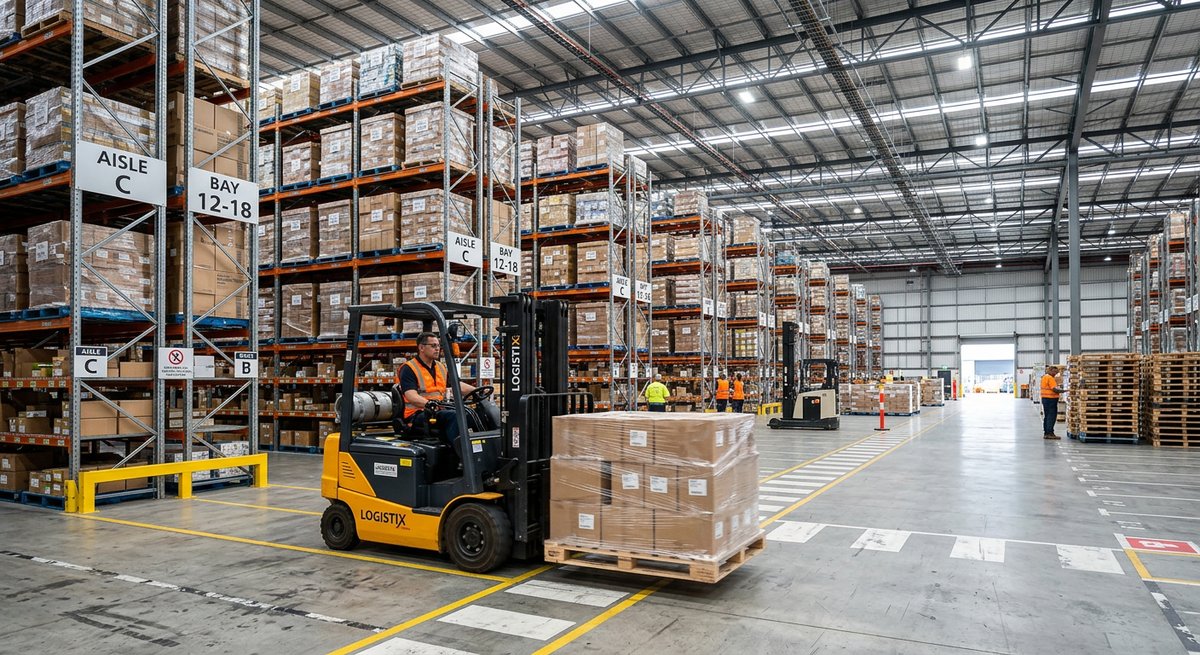
Featured image for post 9570

Selling on Walmart: Fulfillment Requirements and How a 3PL Helps

Walmart Fulfillment Demands Are Different from Amazon

Walmart is the second-largest ecommerce marketplace in the US, with over 120 million monthly unique visitors. For sellers already on Amazon, expanding to Walmart seems like an obvious next step. But Walmart fulfillment has its own rules, performance standards, and logistics requirements. Treating it like a copy of your Amazon operation is a mistake that costs sellers their accounts.

The opportunity is real. Walmart Marketplace has fewer sellers than Amazon (around 150,000 vs. over 2 million), which means less competition per listing. Conversion rates are strong because Walmart shoppers trust the platform. The question is whether your fulfillment operation can meet Walmart’s requirements consistently.

Walmart’s Fulfillment Options

Walmart gives sellers three paths for fulfillment.

Walmart Fulfillment Services (WFS): Walmart’s version of FBA. You send inventory to Walmart’s fulfillment centers. They pick, pack, and ship orders. Your listings get a “Fulfilled by Walmart” tag and qualify for Walmart+ free shipping. Storage fees run $0.75 per cubic foot per month, lower than Amazon FBA’s rates.

Seller Fulfilled: You (or your 3PL) ship orders directly to customers. You control the fulfillment process but must meet Walmart’s delivery speed and accuracy standards. This is where a 3PL experienced in marketplace fulfillment makes a difference.

Walmart GoLocal / DSV: A drop-ship vendor program for larger brands. Products ship from your warehouse when Walmart receives an order on walmart.com. Higher volume requirements and tighter SLAs.

WFS vs Seller Fulfilled: Which to Choose

WFS works well for standard-size products with strong velocity. The “Fulfilled by Walmart” badge improves Buy Box win rates and customer trust. Storage costs are competitive, and the fulfillment fees are comparable to FBA.

Seller Fulfilled makes sense for oversized products, slow-moving SKUs, or sellers who need multi-channel inventory. Sending the same inventory to both FBA and WFS splits your stock and increases your risk of stockouts on one platform. A 3PL shipping direct to customers from one inventory pool solves that problem.

Walmart Fulfillment Performance Standards

Walmart does not mess around with seller performance. Their standards are strict, and violations lead to suspensions fast. Here are the key metrics:

  • On-time delivery rate: 95% or higher
  • Valid tracking rate: 99% or higher
  • Cancellation rate: under 2%
  • Return rate: monitored but varies by category

On-time delivery is the one that trips up most sellers. Walmart measures it against the delivery promise shown to the customer at checkout. If you promise 3-5 business days, the package must arrive within that window at least 95% of the time.

This is where shipping from the wrong location kills you. If your warehouse is in Los Angeles and a customer in New York orders with a 3-day delivery promise, ground shipping will not make it. You either need a warehouse closer to the East Coast, or you need to adjust your delivery promises to match your actual shipping speeds.

Walmart Fulfillment and Regional Warehousing

Walmart prioritizes sellers who can deliver fast across the continental US. Having inventory in a single West Coast warehouse limits your delivery speed to the eastern half of the country. Sellers with inventory in two or three regions (West Coast, Midwest, East Coast) can offer faster delivery and win more Buy Box placements.

A 3PL with multiple warehouse locations gives you this capability without managing multiple facilities yourself. Your 3PL distributes inventory across locations based on demand patterns and ships from the closest warehouse to each customer.

Walmart Listing and Packaging Requirements

Walmart has specific packaging requirements that differ from Amazon. Products must be packaged for individual sale (no case packs shipped as singles). Each unit needs a scannable UPC barcode. Walmart does not use FNSKU labels like Amazon.

For WFS inbound shipments, Walmart requires specific pallet configurations, carton labeling, and shipment documentation. Non-compliant shipments get rejected at the receiving dock. The requirements change periodically, so staying current matters.

Content requirements are also strict. Product listings need accurate item descriptions, correct categorization, high-quality images (minimum 1000×1000 pixels), and compliant product identifiers. Walmart rejects listings that do not meet their content standards.

Walmart Fulfillment Costs Compared to Amazon

WFS fulfillment fees are competitive. For a 1 lb item in standard packaging, WFS charges about $3.45 per unit (as of 2025). Storage runs $0.75/cubic foot/month year-round with no Q4 surcharge, a significant advantage over FBA’s $2.40/cubic foot Q4 storage rate.

Seller Fulfilled costs depend entirely on your 3PL and shipping rates. A typical 3PL charges $2.00-3.50 for pick and pack, plus shipping. Ground shipping for a 1 lb package averages $4.00-6.00 depending on zone. Total fulfillment cost per order: $6.00-9.50.

WFS is clearly cheaper per order for standard items. But Seller Fulfilled gives you one inventory pool for all channels, which reduces total inventory carrying costs and stockout risk.

Common Walmart Fulfillment Mistakes

Sellers new to Walmart make predictable errors. The biggest: using the same delivery promise settings they use on Amazon. Amazon’s delivery estimates are calculated by Amazon based on the fulfillment center location. On Walmart Seller Fulfilled, you set the delivery window. Set it too aggressively and your on-time rate drops below 95%. Set it too conservatively and you lose Buy Box to faster sellers.

Another mistake: ignoring Walmart’s two-day shipping program. Sellers who qualify for and enable two-day delivery see 30-50% more conversions. But you need the fulfillment infrastructure to actually deliver in two days. Promising it and failing is worse than not offering it at all.

Getting Started on Walmart

Apply for a Walmart Marketplace seller account. Approval takes 1-4 weeks. While you wait, get your fulfillment operation ready. If you are going WFS, prepare compliant inbound shipments. If Seller Fulfilled, confirm your 3PL can meet Walmart’s performance standards.

Start with 10-20 of your best-selling SKUs. Do not migrate your entire catalog on day one. Prove you can maintain performance metrics with a smaller selection before scaling up. Walmart rewards consistent sellers with better search placement and Buy Box share over time.

Contact With Us