
Category: Port Logistics
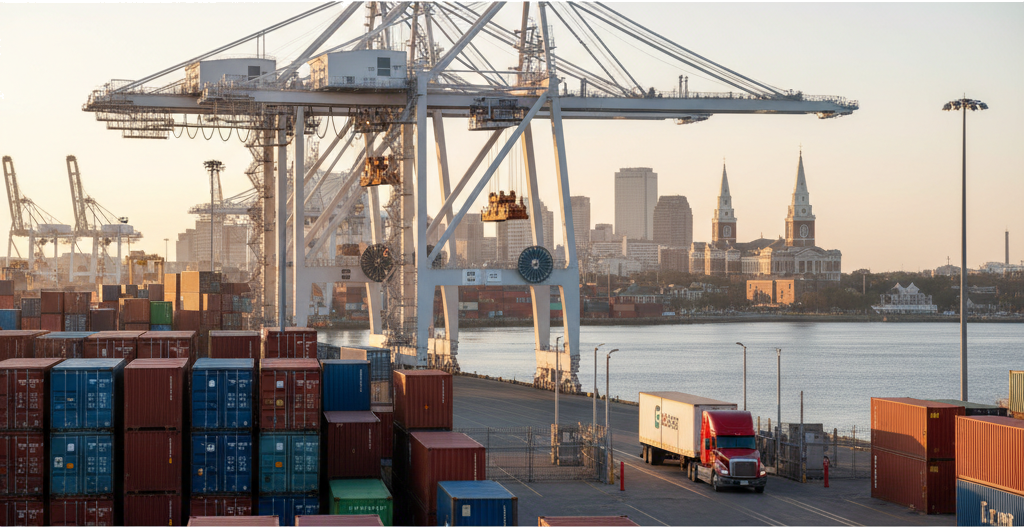
Charleston Port Services: East Coast Import and Drayage Solutions
Charleston Port Drayage Connects the Southeast to Global Supply Chains
Charleston port drayage is the trucking link between the Port of Charleston and the warehouses, distribution centers, and fulfillment operations that serve the southeastern United States. The SC Ports Authority handled 2.9 million TEUs in 2025, making Charleston the 7th busiest container port in the US. For importers targeting markets from Atlanta to Charlotte to Nashville, Charleston often beats the alternatives on both cost and speed.
What makes Charleston different from larger ports is its efficiency. Truck turn times at Charleston’s terminals average 25-35 minutes, some of the fastest in the country. Compare that to 60-90 minutes at ports like New York/New Jersey or Savannah, and you see why trucking companies prefer Charleston pickups.
Charleston’s Container Terminals
The Port of Charleston operates three container terminals, each with its own characteristics that affect your drayage planning.
Wando Welch Terminal in Mount Pleasant is the largest, handling about 50% of Charleston’s container volume. It has 5 ship-to-shore cranes and deep berths that accommodate vessels up to 14,000 TEU. Gate hours run Monday through Friday, 6 AM to 6 PM, with occasional weekend gates during peak season.
North Charleston Terminal (formerly called the Columbus Street Terminal after its relocation) handles growing volumes. It is located closer to I-26, which means faster highway access for drayage moves heading inland toward Columbia, Charlotte, and beyond.
Hugh K. Leatherman Terminal is the newest facility, opened in 2021. It was purpose-built for big ships and currently has 3 ship-to-shore cranes with capacity for more. Leatherman is the most modern terminal in the port system, with near-dock rail access and efficient gate layouts. Truck turn times here regularly come in under 30 minutes.
Charleston Port Drayage Rates and Common Lanes
Drayage pricing from Charleston port terminals to local warehouses is competitive. A 40ft container move within a 25-mile radius of the port costs $275-$450. This is generally cheaper than comparable moves at Savannah or Norfolk.
Popular drayage destinations and approximate rates for a 40ft container:
- Summerville / Jedburg (15-20 miles): $275-$375. This corridor along I-26 has seen massive warehouse development in the past five years.
- North Charleston industrial parks (5-10 miles): $250-$350. Closest to the port terminals.
- Columbia, SC (110 miles): $600-$800. A 2-hour drive up I-26.
- Charlotte, NC (200 miles): $900-$1,200. Popular lane for sellers distributing to the Carolinas.
- Atlanta, GA (300 miles): $1,100-$1,500. Competes with Savannah drayage for Atlanta-bound freight.
Free time at Charleston terminals is typically 4 days for dry containers. Demurrage rates run $125-$300 per day after free time expires, depending on the shipping line. These rates are slightly lower than at larger ports.
Why Charleston Works for Southeast Ecommerce Sellers
Amazon operates multiple fulfillment centers within easy reach of Charleston. The facility in West Columbia, SC is 110 miles away. Charlotte, NC has several Amazon FCs within 200 miles. For FBA sellers, routing inventory through Charleston and prepping at a local 3PL before shipping to these FCs can cut inbound transit time by 1-2 days compared to routing through Norfolk or Savannah.
The Southeast is also one of the fastest-growing ecommerce markets in the country. Population growth in South Carolina, North Carolina, Georgia, and Tennessee means more customers and more demand for local fulfillment. A Charleston-area warehouse puts you within 2-day ground shipping of 100+ million consumers.
For B2B wholesale sellers, Charleston’s proximity to major retail distribution centers is a plus. Dollar General, Lowe’s, and numerous regional retailers have DCs in the Carolinas that receive freight from Charleston-area warehouses daily.
Charleston’s Deepening Project and Future Capacity
The Charleston Harbor Deepening Project is increasing the channel depth to 52 feet, making Charleston one of the deepest harbors on the East Coast. This allows fully loaded post-Panamax vessels to call on Charleston at any tide, reducing the scheduling constraints that sometimes delayed larger ships.
For importers, this means more direct vessel services. In 2025, Charleston saw new direct services from Asia that previously bypassed the port in favor of larger facilities. More service options mean more competitive ocean freight rates and shorter transit times.
The port is also expanding on-dock rail. Norfolk Southern and CSX both serve Charleston with intermodal connections to the Midwest and Northeast. For importers who need to move cargo to inland markets like Memphis, Nashville, or Chicago, Charleston’s rail options add flexibility beyond trucking.
Planning Charleston Port Drayage for Your Supply Chain
Seasonal patterns at Charleston follow the national trend but are less extreme than at West Coast ports. The busiest months run August through November, when holiday inventory arrives. Even during peak, Charleston’s truck turn times rarely exceed 45 minutes, which keeps drayage costs predictable.
Charleston’s location on the East Coast means shorter transit times from European and Middle Eastern origins. A shipment from Rotterdam reaches Charleston in 12-14 days, compared to 30+ days if routed through the Panama Canal to the West Coast. For sellers sourcing from India, Turkey, or Eastern Europe, this matters.
One factor to watch: Charleston sits in hurricane territory. The port has weathered several close calls in recent years. While disruptions are rare (the port closed for only 2 days during Hurricane Ian in 2022), it is worth having a contingency plan. Some importers maintain relationships with both Charleston and Savannah drayage providers so they can redirect vessels if needed.
If you currently import through New York/New Jersey or Savannah and distribute to the Southeast, run a cost comparison with Charleston. Lower drayage costs, faster terminal turns, and the new deep-water channel make it a competitive option that many importers overlook.

Houston Port Logistics: Container Services for Gulf Coast Importers
Houston Port Logistics Serves the Fastest-Growing Import Market in the US
Houston port logistics handles a growing share of US containerized imports, and for good reason. Port Houston ranked as the top US port by waterborne tonnage and processed over 4 million TEUs in 2025. Importers in Texas, the Midwest, and the Southeast are discovering that routing through Houston avoids the chronic congestion of West Coast ports while cutting transit times for goods coming from Europe, the Middle East, India, and Latin America.
If you import into the central US, Houston port logistics deserves a hard look. The math often works better than shipping to Long Beach and railing freight inland, especially when West Coast port fees and congestion costs are factored in.
Port Houston Terminal Operations
Port Houston operates two main container terminals: Bayport Container Terminal and Barbours Cut Container Terminal. Between them, they handle all of Houston’s containerized cargo.
Bayport is the newer, larger facility located on the west side of the Houston Ship Channel. It has 7 ship-to-shore cranes and space for further expansion. Truck turn times at Bayport average 30-45 minutes, which is significantly faster than what you see at congested ports like Long Beach or New York/New Jersey.
Barbours Cut is the older terminal, located closer to the channel entrance. It handles both container and ro-ro (roll-on, roll-off) cargo. Turn times here run slightly longer (45-60 minutes) due to the facility’s layout, but it is still efficient by national standards.
Both terminals offer extended gate hours. Bayport runs gates Monday through Friday, 7 AM to 6 PM, with Saturday hours available during peak periods. This flexibility helps drayage providers avoid the worst traffic windows.
Drayage Costs and Routes from Port Houston
A standard Houston port logistics drayage move from Bayport or Barbours Cut to a warehouse within the Houston metro area (30-mile radius) costs $300-$500 for a 40ft container. This is often $50-$100 cheaper than comparable moves at Long Beach, reflecting Houston’s lower congestion and operating costs.
Common drayage destinations from Port Houston:
- East Houston / Pasadena warehouse district: $300-$400. Closest to the port, heaviest concentration of 3PLs.
- Northwest Houston / Cypress: $400-$500. Growing distribution hub along US-290.
- Katy / West Houston: $450-$550. Access to I-10 corridor for further distribution.
- Dallas-Fort Worth: $800-$1,200. A 4-5 hour drive via I-45. Some importers use rail for this lane.
- San Antonio / Austin: $700-$1,000. 3-4 hours on I-10.
Houston drayage avoids the chassis shortage problems that plague West Coast ports. The Houston chassis pool is well-supplied, and per-diem charges are lower ($30-$50/day compared to $40-$75 on the West Coast).
Why Houston Works for Central US Distribution
Geography tells the story. Houston sits within a two-day truck drive of 45% of the US population. Compare that to Long Beach, where reaching the same coverage requires a 4-5 day cross-country haul or expensive intermodal rail.
For sellers on Amazon FBA, this geographic advantage is significant. Amazon’s fulfillment centers in Texas (Houston, Dallas, San Antonio, Austin) receive inventory faster from a Houston-area warehouse than from one in Southern California. Faster inbound means faster check-in, which means faster availability for sale.
Walmart’s distribution network also leans heavily on the central US. Their fulfillment centers in Texas and the Southeast are a one-day drive from Houston. For Walmart WFS sellers, a Houston-based 3PL can mean the difference between 1-day and 3-day inbound transit.
Houston’s Advantage for Non-Asian Imports
While Long Beach dominates Asian imports, Houston is often the better port for goods from other regions. Direct vessel services connect Houston to major ports in Northern Europe (Rotterdam, Hamburg, Antwerp), the Mediterranean, the Middle East, India, and South America.
For sellers importing from Turkey, India, or Brazil, shipping through Houston can cut transit time by 7-14 days compared to routing through the Suez Canal and across the Pacific to the West Coast. That time savings translates directly to faster inventory availability and lower working capital requirements.
Latin American sourcing, which is growing as sellers diversify away from China, also favors Houston. Mexican manufacturing hubs in Monterrey and Guadalajara are within 1-2 day trucking distance of Port Houston. Central American and Colombian shipments have short ocean transit times (3-7 days) to the Gulf Coast.
Houston Port Logistics Challenges to Plan For
Houston has its own set of issues. Hurricane season (June through November) can disrupt port operations. When a tropical system enters the Gulf of Mexico, Port Houston may close for 2-5 days. In 2024, Tropical Storm Alberto caused a 3-day port closure that backed up approximately 15,000 containers.
The Houston Ship Channel itself is a constraint. At 530 feet wide in many stretches, it limits the size of vessels that can call on Houston. The largest container ships (18,000+ TEU) cannot transit the channel, which means Houston often receives feeder services from larger transshipment hubs in the Caribbean or direct calls from mid-size vessels.
Road infrastructure near the port is adequate but can congest during morning and evening rush hours. SH-225 (the main highway connecting the port to I-610 and I-10) gets heavy truck traffic. Experienced drayage providers schedule pickups for mid-morning or early afternoon to avoid the worst of it.
Making Houston Port Logistics Work for Your Business
Start by comparing total landed cost, not just ocean freight rates. A shipment that costs $200 more in ocean freight to Houston but saves $500 in drayage, storage, and inland transportation is a net win. Factor in time savings too: getting product to market a week faster means a week less of carrying cost on your inventory.
If you currently route everything through the West Coast, try splitting your next few shipments. Send one container to Houston and compare actual costs and timelines against your Long Beach lane. The data will make the decision for you.
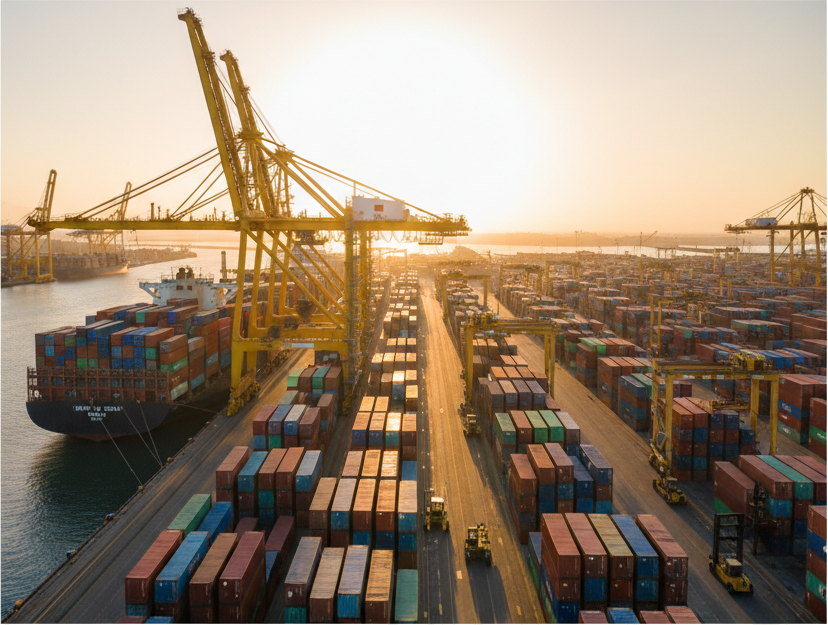
Port of Los Angeles Drayage Guide: Port-to-Amazon Services for Importers
Port Of Los Angeles Drayage: What Amazon Sellers and Importers Need to Know
Port of Los Angeles drayage is a critical entry point for U.S. imports. For Amazon sellers, understanding how it operates is essential. Delays, missed appointments, and unexpected fees cascade into expensive downstream problems.
The difference between efficient importers and those who absorb constant friction comes down to experience. Established relationships matter more than vendor count. Paying more does not solve the problem.
How This Port Creates Challenges for Importers
Every major port has its own patterns. These include peak congestion windows, chassis availability cycles, and terminal appointment quirks. Port of Los Angeles drayage is no exception. For importers unfamiliar with these patterns, the learning curve is steep.
Specifically, common friction points include:
- Appointment system complexity: terminals use different booking platforms with limited windows that fill fast
- Chassis shortages: these can strand a cleared container and trigger demurrage charges immediately
- Drayage capacity constraints: especially during peak season, carriers prioritize established accounts
- Last-free-day management: missing the window by one day starts demurrage at $300 to $500 per container, per day
- Terminal system outages: IT issues delay appointment confirmations at the worst possible times
As a result, importers without established relationships at the Port of Los Angeles face all these failure modes at once. When multiple problems compound on the same shipment, costs can exceed the cargo value for a small importer.
The Real Cost of Port Delays
Demurrage and detention are just the beginning. When a container sits at the port, downstream costs usually exceed the port fees themselves. For example, your prep warehouse holds an empty slot and may not reschedule quickly. Meanwhile, Amazon’s receiving window may close before your inventory arrives.
For Amazon FBA sellers, lost ranking is the most expensive downstream cost. If your inventory misses a receiving window during peak season, you lose weeks of velocity. Your competitors keep selling while you wait. By the time your inventory goes live, the peak opportunity has passed.
Therefore, experienced importers do not rely on hope. Instead, they work with a partner who operates through the port regularly. That partner knows how to get containers out before problems develop.
The Downstream Impact on Amazon FBA
Amazon’s receiving system operates on appointment windows. When your shipment is delayed, the original delivery date shifts. Sometimes Amazon accommodates a late arrival. Other times, you must reschedule, which adds a week or more.
Moreover, the ranking impact compounds with each lost selling day. A product that drops off page one can take 2 to 6 weeks to recover, even after inventory is restored. During that recovery period, competitors capture your former sales. For sellers with tight cycles, a single port delay creates a ranking hole that persists for a full quarter.
This is exactly why having a partner at Port of Los Angeles drayage with established terminal relationships is not a luxury. It is a risk management decision with measurable financial consequences.
MeisterPrep’s Port-to-Amazon Services
MeisterPrep manages the complete container flow for clients importing through Port of Los Angeles drayage. As your single accountable partner, we handle every step:
- Container pickup coordination: terminal appointments, chassis sourcing, and drayage against your last free day
- Customs clearance support: we align documentation with your broker and resolve holds before they cause delays
- Container unstuffing: professional unloading with damage documentation and discrepancy reporting
- Full Amazon FBA prep: FNSKU labeling, poly bagging, bubble wrap, bundling, and carton configuration
- Inventory warehousing: buffer storage that absorbs timing gaps between port release and Amazon receiving
- Amazon inbound execution: shipping plans, label generation, and carrier-confirmed outbound to fulfillment centers
Frequently Asked Questions
How does MeisterPrep handle unexpected port delays?
We actively monitor container status and coordinate with carriers and terminal contacts. As a result, we anticipate delays before they escalate. When delays occur, we adjust our schedule and notify you immediately with a revised timeline.
Can MeisterPrep help with customs clearance?
Yes. We work alongside licensed customs brokers and coordinate documentation. If you do not have a broker relationship, we can refer you to brokers we work with regularly at your port of entry.
What is the turnaround time from container arrival to Amazon-ready?
For standard prep on a 40-foot container, we typically complete processing within 3 to 7 business days. However, turnaround varies by product type, prep requirements, and volume. Contact us for a specific estimate.
Stop Managing Port Logistics Yourself
If you import through Port of Los Angeles drayage, talk to MeisterPrep. We will show you how to move containers from port to Amazon faster. Additionally, you will reduce total cost compared to managing multiple vendors yourself.

Long Beach Port Drayage: Getting Containers to Your Warehouse Fast
Long Beach Drayage Is Where Most US Imports Begin
Long Beach drayage is the short-haul trucking that moves your container from the Port of Long Beach (or neighboring Port of Los Angeles) to a warehouse. Together, these two ports handle roughly 40% of all US containerized imports. If you source products from China, Vietnam, or anywhere in Asia, your freight probably enters the country right here. Getting your container off the terminal and to your 3PL quickly determines how fast you can start selling.
The Port of Long Beach processed 9.5 million TEUs (twenty-foot equivalent units) in 2025. That volume creates congestion, and congestion creates cost. Every day your container sits on the terminal past free time, you pay demurrage charges of $150-$350 per day depending on the shipping line. On the chassis side, per-diem charges from equipment providers add another $40-$75 per day. A five-day delay can cost $1,000+ before your product even reaches a shelf.
How Long Beach Drayage Works
The process starts when your ocean carrier notifies you that your container has been discharged from the vessel. This triggers a “last free day” countdown, typically 3-5 days of free storage at the marine terminal. After that, demurrage kicks in.
Your drayage provider sends a truck to the terminal. The driver enters through one of Long Beach’s terminal gates (Pier A through Pier J), picks up the container, and drives it to your warehouse. For most destinations in the greater LA area, this trip takes 1-3 hours in normal traffic. During peak season (August through November), the 710 freeway corridor between the port and inland warehouses can add 1-2 hours to that transit.
At the warehouse, the container gets unloaded (a process called “devanning”), the goods are received into inventory, and the empty container is returned to a designated depot. The empty return location matters because some depots are 30+ miles from the port, which adds cost to the Long Beach drayage move.
Terminal-Specific Details That Affect Your Costs
Long Beach has six main container terminals: LBCT (Long Beach Container Terminal), TTI (Total Terminals International), SSA Pier A, ITS (International Transportation Service), PCT (Pacific Container Terminal), and SSA Pier J. Each terminal has its own gate hours, appointment systems, and congestion patterns.
LBCT is the most automated terminal on the West Coast, which generally means faster truck turn times (45-60 minutes average). Older terminals like ITS and PCT can have turn times exceeding 90 minutes during busy periods. Your drayage provider should know which terminals are running smoothly on any given day and schedule pickups accordingly.
Long Beach Drayage Rates and Cost Factors
A standard drayage move from the Port of Long Beach to a warehouse within a 30-mile radius runs $350-$550 for a 40ft container. Going further inland (to the Inland Empire, for example, 60-80 miles away) pushes that to $600-$900.
Additional costs that catch first-time importers off guard:
- Chassis rental: $40-$65 per day. The chassis is the wheeled frame that the container sits on during transport.
- Fuel surcharge: Usually 15-25% on top of the base drayage rate.
- Pre-pull: $75-$150 if the trucking company needs to stage your container outside the terminal before your warehouse appointment.
- Hazmat surcharge: $100-$200 for containers with dangerous goods classifications.
- Overweight charges: Containers exceeding 44,000 lbs gross weight require special permits and routes, adding $200-$400.
Congestion Patterns at Long Beach
Long Beach congestion follows predictable patterns. The worst months are September through November, when holiday inventory floods in. During the 2024 peak season, average container dwell times at Long Beach terminals hit 4.2 days, up from the typical 2.5-day average.
Weekly patterns matter too. Monday and Friday gate appointments are the hardest to secure. Mid-week (Tuesday through Thursday) typically offers better availability and faster turn times. If your free time allows flexibility, scheduling drayage for a Wednesday pickup saves both time and frustration.
Night gates, when available, are worth considering. Several Long Beach terminals offer extended gate hours (some running until midnight or later) with significantly less congestion. The trade-off is that some warehouses do not accept after-hours deliveries, so coordination between your drayage provider and your 3PL is necessary.
Why Warehouse Location Matters for Long Beach Drayage
Most ecommerce 3PLs serving Long Beach importers are located in one of three zones. The immediate port area (Carson, Compton, Wilmington) keeps drayage costs lowest at $350-$450 per container but has higher warehouse rents ($1.40-$1.80/sq ft/month). The mid-zone (City of Industry, La Mirada, Cerritos) balances drayage cost with rent. The Inland Empire (Ontario, Riverside, San Bernardino) has the cheapest warehouse space ($0.80-$1.10/sq ft/month) but the highest drayage costs.
For sellers doing fewer than 10 containers per month, the warehouse rent difference usually outweighs the drayage savings. For higher-volume importers, the math can flip.
Choosing a Long Beach Drayage Provider
Look for a provider with their own TWIC-card-holding drivers (Transportation Worker Identification Credential, required for port access). Brokers who subcontract every load add a markup and have less control over scheduling.
Ask about terminal relationships. A good Long Beach drayage company knows which terminal gates have the shortest wait times on which days. They have contingency plans when a terminal shuts down unexpectedly, which happens several times per year due to equipment failures or labor actions.
Real-time tracking should be standard. You need to know when your container leaves the terminal, when it arrives at the warehouse, and when the empty gets returned. This visibility lets you coordinate receiving crews and avoid warehouse detention charges.